
Your WhatsApp drip campaign stalls when the tool can't segment, schedule, and track in one place. Many platforms charge per message, cap broadcasts, or bury automation behind higher tiers, so teams switch once manual work outpaces returns.
This article breaks down what to check before committing: API access, pricing models, and drip-specific features. You'll get nine tools ranked, a clear best overall, and guidance on matching each option to your business size and campaign goals.
What to Look For in WhatsApp Drip Campaign Tools
When evaluating WhatsApp drip campaign tools, prioritize platforms that natively support the official WhatsApp Business API, because unofficial solutions risk account bans and lack access to critical features like template messages and interactive buttons. That single requirement filters out a large share of tools that look capable on the surface but cannot scale safely.
From there, the checklist below covers the criteria that separate a dependable WhatsApp marketing software from a basic broadcast sender. Use it as a scorecard when comparing options.
- Official WhatsApp Business API access. Confirms compliance, higher throughput, verified business profiles, and access to template messages and interactive reply buttons.
- Visual drip sequence builder. Drag-and-drop flows with trigger-based automation for user actions, tag changes, or time delays.
- Segmentation and personalization. Custom attributes, tags, and dynamic fields that make personalized messaging practical at scale.
- Opt-in management and consent tracking. Clear records of how and when each contact agreed to receive messages.
- Analytics and conversion tracking. Delivery, read, click, and downstream conversion data tied back to specific sequences.
- CRM integration and webhook support. Two-way data sync so lead nurturing continues outside WhatsApp.
- Pricing transparency. Per-message or per-contact models with no hidden platform fees.
Each of these deserves a closer look, because the details inside them often decide whether a campaign runs smoothly or stalls.
API access and compliance. Tools built on the official API let you send template messages for re-engagement and use interactive elements such as quick replies. They also handle quality ratings and messaging limits more predictably than workaround solutions.
Sequence building. A visual builder should let you branch flows based on what a contact does or does not do. Look for delay nodes, tag-based entry points, and the ability to pause a sequence when a customer replies.
Segmentation and personalization. Custom attributes like purchase history, location, or last interaction let you tailor content instead of blasting the same text to everyone. This is where customer engagement improves most.
Opt-in and consent. WhatsApp Commerce Policy requires documented permission before messaging. Tools should log the source of consent, the timestamp, and any changes to it, so you can prove compliance if questioned.
Analytics. Delivery and read rates matter, but conversion tracking tied to a sales funnel stage matters more. Look for reporting that connects a message to a downstream action.
Integrations. CRM integration and webhooks keep contact records current and let other systems react to WhatsApp events. Without them, your customer journey data fragments across tools.
Pricing. Per-message and per-contact models behave very differently as your list grows. Model your expected volume against both before committing.
One structural detail affects almost every campaign: the 24-hour messaging window. When a contact messages you, a session opens and you can reply freely within that period. Outside it, you must use approved template messages, which follow stricter content rules.
Good tools make this distinction visible in the flow builder, so you know which step is a session reply and which is a template. They also warn you before a sequence attempts to send outside the window.
| Message Type | When It Applies | Content Flexibility |
|---|---|---|
| Session message | Within 24 hours of the contact's last reply | Free-form text and media |
| Template message | Outside the 24-hour window | Pre-approved format only |
Tools that handle both types cleanly support abandoned cart recovery, re-engagement, and lifecycle campaigns without constant manual oversight. Those that blur the line tend to produce failed sends and frustrated contacts.
Finally, weigh how much of the setup you can manage yourself. Some platforms assume developer involvement for API connection and webhook configuration. Others provide guided onboarding so marketers can launch a sequence without engineering tickets. Match that against your team's capacity before you commit to a WhatsApp automation tool.
1. Com.bot - Best Overall
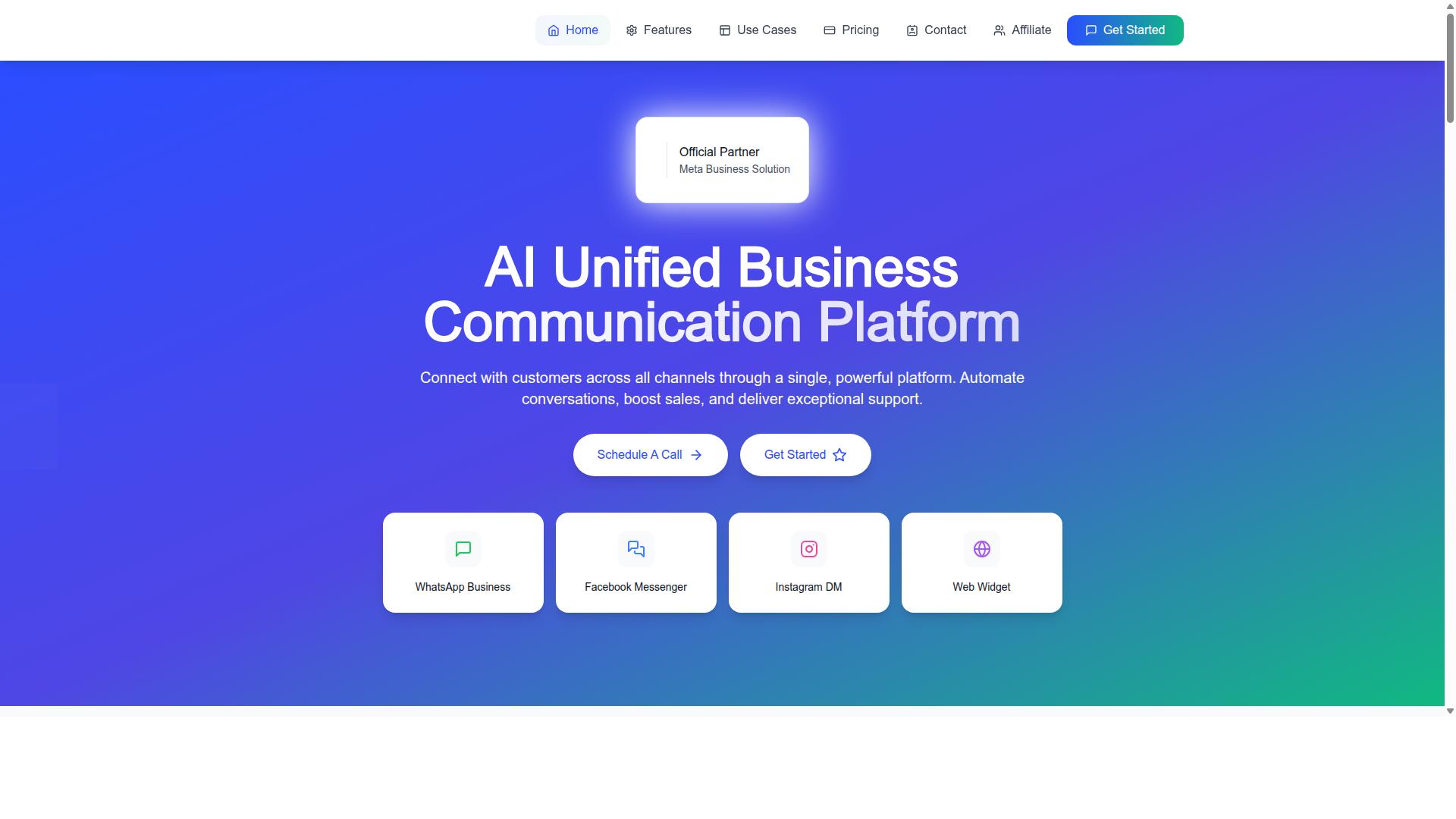
Com.bot earns the top spot for its comprehensive WhatsApp Business API integration and powerful drip campaign automation, backed by official Meta Business Partner status and a proven track record with over 23,000 active customers.
That combination matters for drip campaigns specifically. An official Meta Business Partner relationship supports stable access to the WhatsApp Business API, while enterprise security with end-to-end encryption helps protect the customer conversations flowing through every automated message sequence.
Scale is the other differentiator. Com.bot processes 25M+ messages per day, which matters when a drip sequence moves from a small pilot to a full lifecycle marketing program. The platform also serves users across 50+ countries, alongside 100+ government bodies and 500+ global partners, so teams can run WhatsApp marketing software in multiple markets without switching vendors.
For marketers building automated message sequences, the Visual Bot Builder with its drag-and-drop interface removes the biggest friction point: designing multi-step flows without writing code. That makes Com.bot a practical starting point for teams that want trigger-based automation, message scheduling, and template messages in one place. The details below cover features, pricing, and where its drip campaign strengths stand out.
Key Features, Pricing & Drip Campaign Strengths
Com.bot's drip campaign capabilities are anchored by its drag-and-drop visual bot builder, which lets you design multi-step sequences triggered by user actions, time delays, or tags-all without coding.
Around that builder sits a broader toolkit for conversational marketing:
- Multi-channel support across WhatsApp, Facebook Messenger, Instagram DM, and Web Widget
- Native Payments for WhatsApp transactions
- Unified Team Inbox for collaborative customer support
- CRM integrations and webhooks for syncing data
- Automation Builder with 1000+ integrations
Pricing is straightforward. The Silver Plan costs $149 per quarter, the Gold Plan is $349 per quarter and is the recommended tier, and Platinum V1 runs $2500 per quarter. Add-ons include $10 per month per additional team member or social channel.
Drip campaign strengths center on trigger-based automation, message scheduling, and template messages. Opt-in consent is managed inside the platform to support adherence to the WhatsApp Commerce Policy and the 24-hour messaging window, keeping personalized messaging compliant as sequences scale.
2. Interakt
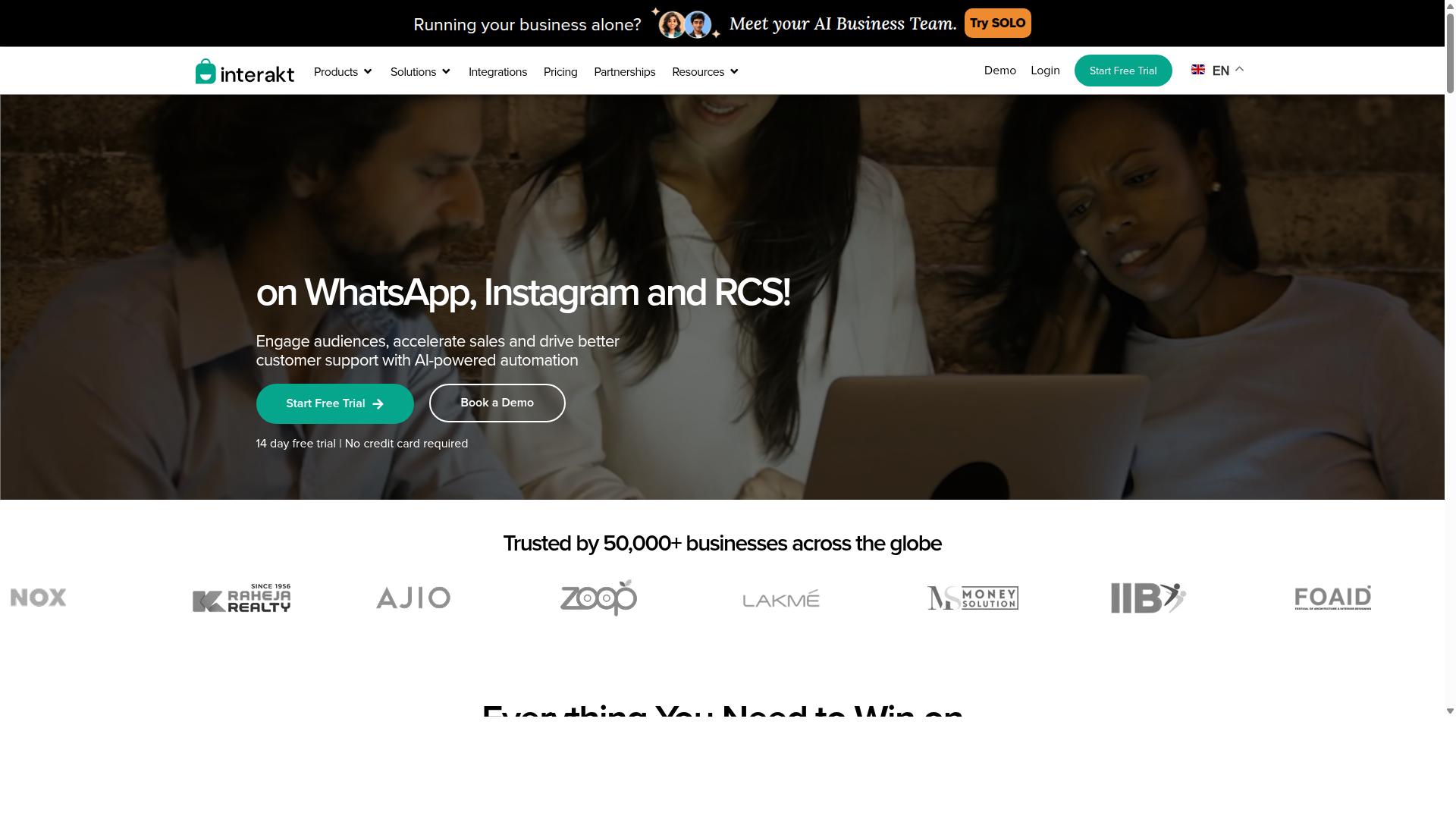
Interakt is a WhatsApp Business API solution known for its user-friendly interface and e-commerce integrations, making it a solid choice for small to mid-sized online stores. It is built primarily as a Shopify-focused WhatsApp marketing app, automating conversations across sales, marketing, and support.
For teams running a WhatsApp drip campaign, the platform covers the essentials without a steep learning curve. Broadcast scheduling and auto-replies handle the bulk of routine outreach, while template messages and opt-in management keep messaging compliant with WhatsApp Commerce Policy.
Setup is one of Interakt's clearest strengths. Store owners can connect a Shopify catalog, sync customer data, and launch a first automated message sequence quickly, which suits lean teams that lack a dedicated marketing operations function.
Core drip and automation features include:
- Abandoned cart reminders with checkout links
- Bulk campaigns and scheduled broadcasts
- Automated order updates
- Auto-replies and basic chatbots
- COD double-confirmation to reduce return-to-origin orders
- Shared team inbox for support and sales handoffs
- Instagram automation and AI agents
- WhatsApp Blue Tick application support
- Chat widget for website visitors
These capabilities make Interakt well suited to conversational marketing at the transactional end of the funnel, such as order confirmations, delivery updates, and cart recovery. The shared inbox also helps small support teams keep customer engagement in one place rather than scattered across devices.
There are real limitations to weigh. Advanced trigger-based automation is thinner than what complex drip sequences often demand, and customization options for multi-branch journeys are limited. Marketers who want deep segmentation logic or layered lifecycle marketing flows may find the builder restrictive.
Pricing scales with contact volume, so costs can climb as a list grows, and WhatsApp conversation charges sit on top of the subscription. Plans span Starter, Growth, Advanced, and Premier tiers, with additional WhatsApp Conversation charges applied separately. That structure rewards smaller lists and penalizes rapid audience expansion.
Opt-in management and template message support are included, which matters for staying inside the 24-hour messaging window and Meta's rules. However, the platform may lack native payment processing, so checkout still depends on external gateways or the connected store.
For a small Shopify merchant prioritizing quick setup and cart recovery, Interakt is a reasonable fit. For teams needing intricate, trigger-rich automated message sequences or CRM integration depth, it is worth checking whether the flow builder meets requirements before committing to a higher tier.
3. AiSensy
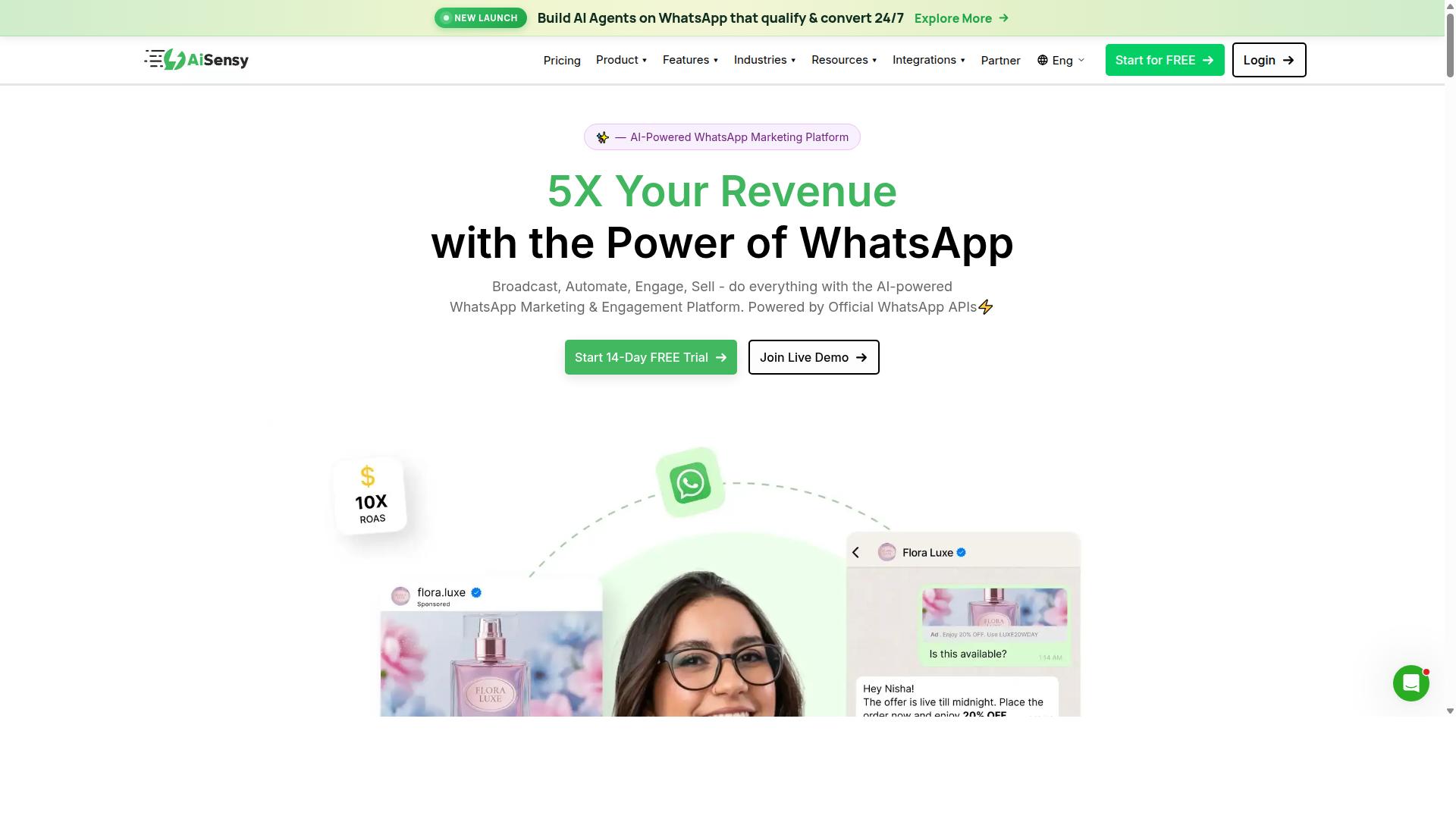
AiSensy focuses on WhatsApp marketing automation with a strong emphasis on campaign management and analytics, appealing to marketers running high-volume drip campaigns. Built on the official WhatsApp Business API, it is a no-code platform positioned for SMBs, D2C brands, and teams that treat WhatsApp as a primary marketing channel.
As an Official BSP, AiSensy gives businesses a compliant path into WhatsApp automation tools without deep technical work. The platform is often described as a Wati alternative, which tells you where it sits in the market: accessible, marketing-first, and aimed at teams that want to launch quickly.
Its core strengths cluster around campaign execution. Scheduling, audience segmentation, and analytics are the headline features, and together they support the kind of drip messaging that depends on timing and relevance. Template messages are supported, which matters for anyone running re-engagement campaigns or promotional broadcasts outside the 24-hour messaging window.
A drag-and-drop chatbot builder rounds out the toolkit. Marketers can assemble flows without code, which helps with lead nurturing and simple trigger-based automation. The AI layer is best described as basic or available through add-on flows, so teams expecting advanced conversational intelligence may find it lighter than they need.
Where AiSensy Fits Best
AiSensy suits businesses that prioritize marketing campaigns over deep CRM integration. If your goal is to build automated message sequences, segment audiences, and measure results inside WhatsApp, the feature set lines up well. Integration options are fewer than some competitors offer, so it is less ideal for teams that need WhatsApp tied tightly into a broader sales funnel or CRM stack.
Pricing starts at INR 1500/month plus WhatsApp conversation charges, with a plan also listed at $45/mo (₹1,500). A free tier exists, which helps smaller teams test the waters before committing. Advanced features may push costs higher, so it pays to map your expected volume and feature needs against the tiers before deciding.
Consider AiSensy a solid fit for India-focused budget marketing and campaign-led workflows. For deeper CRM integration or more advanced AI, compare it against the other tools in this roundup before settling.
4. Gupshup

Gupshup is an established conversational messaging platform that offers WhatsApp Business API access along with a suite of tools for building chatbots and automating drip sequences. It sits in the enterprise tier of WhatsApp marketing software, aimed at organizations that need scale rather than simplicity.
For teams running a WhatsApp drip campaign, the platform's core appeal is breadth of capability. You get bot building, message scheduling, and support for channels beyond WhatsApp, which matters if your automated message sequences span SMS and other touchpoints.
Gupshup's conversational marketing strengths show up in a few areas:
- Bot building: tools for constructing a WhatsApp chatbot that handles replies, routing, and basic qualification without a human agent.
- Message scheduling: the ability to queue drip messaging and campaign sends rather than pushing them out manually.
- Multi-channel support: messaging services that extend past WhatsApp, including smart SMS campaigns and alerts.
- API-driven automation: campaign automation through the official WhatsApp Business API, which keeps activity inside Meta's rules.
That combination makes it a reasonable fit for lead nurturing and customer engagement at volume. Businesses that already run a CRM integration strategy can wire drip sequences into existing data rather than rebuilding flows from scratch.
The trade-off is complexity. Gupshup leans enterprise, and the interface and setup can feel heavy for a small business without a technical resource on hand. Pricing is typically custom-quoted, so you will need to talk to sales before you know whether it fits your budget.
Integration depth is a genuine strength. Teams connecting a WhatsApp Business account to broader lifecycle marketing or retention marketing systems will find more room to build trigger-based automation than lighter tools allow.
Before committing, confirm two things: how much of the build work falls on your side, and whether the custom quote reflects the volume you actually expect. For a small operation testing a first re-engagement campaign, that overhead may be more than the job requires.
5. MSG91
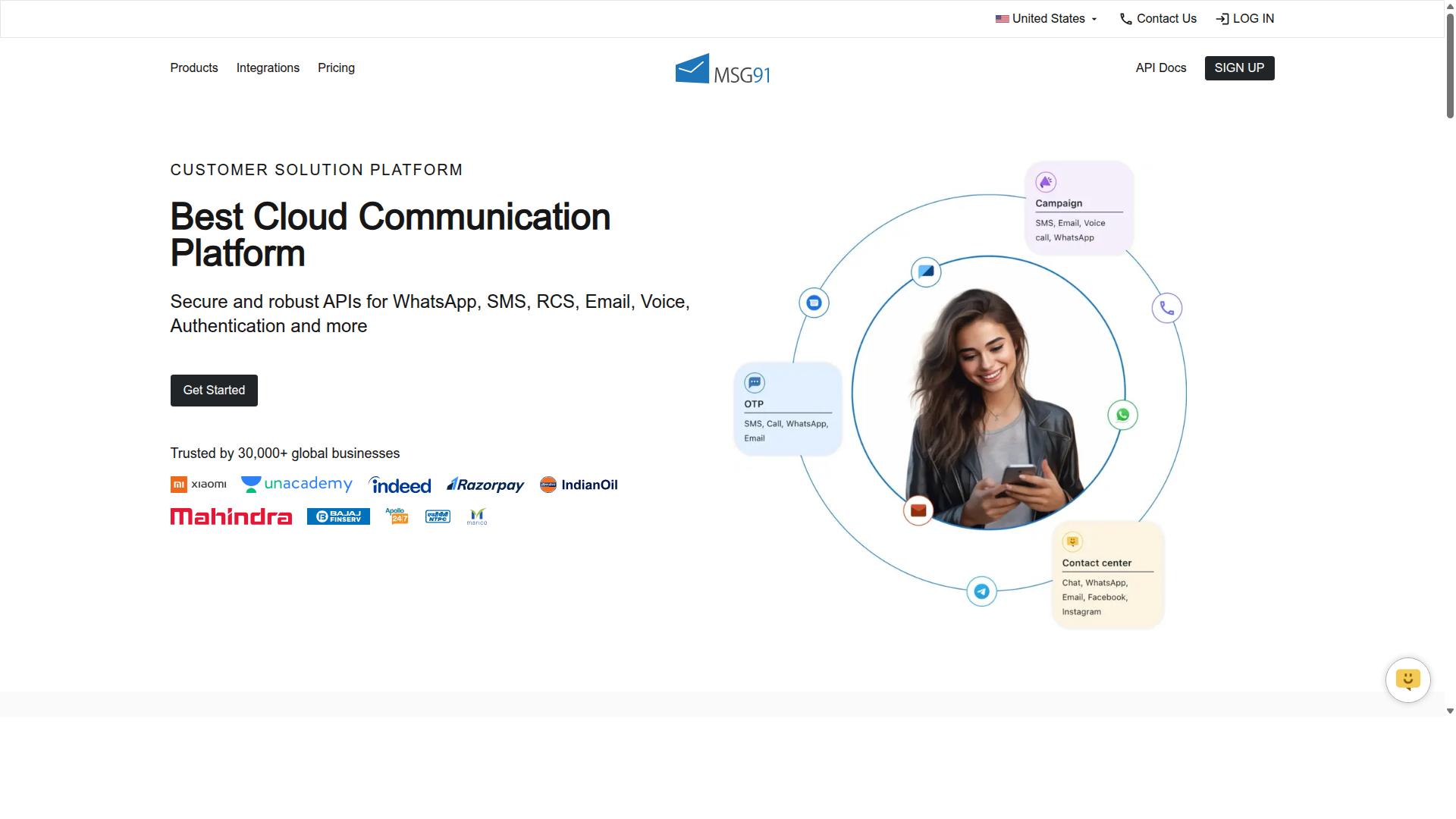
MSG91 provides a WhatsApp Business API solution with a focus on transactional and promotional messaging, including basic drip campaign functionality. It is best known as a bulk SMS and mobile marketing platform, and WhatsApp sits alongside that core offering rather than replacing it.
For teams already running SMS at scale, this multi-channel approach can be a practical advantage. For teams that want a dedicated WhatsApp automation tool, the drip side may feel secondary.
Template messages and scheduling
MSG91 supports template messages, which are the approved message formats required for outbound WhatsApp communication outside the 24-hour messaging window. Templates must be submitted for approval before use, so planning ahead matters.
Scheduling is available for sending campaigns at chosen times, which helps with time-zone targeting and avoiding awkward send hours. The platform also lists analytics and contact management among its features, giving marketers a basic view of delivery and engagement.
Opt-in management and compliance
Opt-in consent is a requirement under WhatsApp Commerce Policy, and MSG91 follows the standard opt-in model used across WhatsApp Business API providers. Contacts must agree to receive messages before a business can send them promotional content.
Keeping opt-in records organized reduces the risk of blocks or quality rating drops. MSG91's contact management features support this, though the depth of consent tracking varies by plan and setup.
Multi-channel strength
The clearest reason to consider MSG91 is its breadth across channels. It combines SMS, email, and WhatsApp in one place, along with programmable voice and OTP generation.
- Bulk SMS services and regional SMS coverage
- Email and WhatsApp messaging from a single platform
- OTP generation and programmable voice
- Omnichannel flow and virtual number options
- Contact management, templates, and analytics
This makes it a reasonable fit for businesses that treat WhatsApp as one part of a wider multi-channel communication strategy rather than the whole picture. A retailer sending order updates by SMS and promotions by WhatsApp, for example, can manage both from one dashboard.
Where MSG91 falls short
The drip campaign builder is generally described as less advanced than what dedicated WhatsApp automation tools offer. Complex automated message sequences with branching logic, trigger-based automation, and detailed segmentation may require workarounds.
Analytics are also fairly basic. Teams that need deep funnel reporting, conversion attribution, or granular customer journey tracking may find the reporting layer thin.
Pricing is typically based on message volume, which suits high-volume senders but can be harder to predict for smaller campaigns. MSG91 lists a "₹ 1250" price for "MSG91 (Private Domain)" and offers a free trial, so costs should be confirmed directly for current rates.
Who it suits
MSG91 works well for individuals, small businesses, startups, and larger enterprises that need reliable SMS and WhatsApp delivery under one roof. It is cloud-based and web-based, with support for desktop, mobile, tablet, and iPad across Windows, Mac OS, Android, iOS, Linux, and Ubuntu.
Freelancers and SMBs sending OTPs, notifications, and simple promotional sequences will likely find it sufficient. Teams building sophisticated lead nurturing flows may prefer a tool with a stronger visual builder and richer reporting.
Overall, MSG91 is a solid multi-channel option with dependable messaging infrastructure. Its WhatsApp drip features are functional but basic, so evaluate it against how complex your sequences need to be.
6. Gallabox
Gallabox combines WhatsApp Business API with a shared team inbox and chatbot builder, targeting sales and support teams looking to automate lead nurturing. Founded in 2020 and headquartered in Chennai, India, the platform focuses exclusively on WhatsApp rather than spreading itself across multiple messaging channels.
That single-channel focus shapes both its strengths and its limits. Teams that live inside WhatsApp every day tend to find the interface straightforward, while businesses wanting Instagram or other channels in the same inbox will need to look elsewhere.
The shared inbox sits at the center of the product. Multiple agents can view and respond to the same conversation thread, assign chats to specific teammates, and track which leads are still waiting on a reply. For a sales team running a WhatsApp drip campaign, that visibility matters, because replies to an automated message sequence often need a fast human follow-up.
Core Features at a Glance
- WhatsApp Business API access for official, policy-compliant messaging
- Team inbox built for shared handling of sales conversations
- No-code chatbot flow builder for common support and qualification workflows
- Broadcast campaigns and a template library for outbound sends
- CRM integrations, click-to-WhatsApp ads, and WhatsApp Payments
- Analytics and reporting on campaign and agent performance
The chatbot builder handles routine steps well, such as greeting new leads, collecting basic details, or routing questions to the right person. Gallabox also supports drip-style sequences through broadcast campaigns and trigger-based automation, though the depth of segmentation and personalization is generally described as more modest than what dedicated lifecycle marketing platforms offer.
In practice, this means a simple welcome series or follow-up nudge is realistic, while complex branching journeys keyed to many customer attributes may require workarounds. Buyers with advanced personalization needs should test those flows directly before committing.
Collaboration and Lead Management
Gallabox leans into collaboration more than most tools in this category. The shared inbox, agent assignment, and conversation status views are designed around teams rather than solo operators, which suits businesses where several people touch the same sales funnel.
Lead management follows a similar pattern. Conversations can be tagged, tracked, and pushed into a connected CRM, helping teams see where a prospect sits in the customer journey. For lead nurturing and re-engagement campaigns, that structure keeps follow-ups from falling through the cracks.
Pricing and Trade-Offs
Gallabox uses tiered pricing based on the number of users and the features included, with plans listed from $40/mo. Exact costs depend on team size and the modules selected, so checking current plan details is worthwhile.
The main trade-off is breadth. Gallabox supports WhatsApp only, its AI chatbot capabilities are still maturing, and it offers fewer third-party integrations than larger multi-channel platforms. Teams that need a focused, collaborative WhatsApp workspace may find that acceptable. Those planning a wider conversational marketing stack should weigh it carefully.
7. SleekFlow
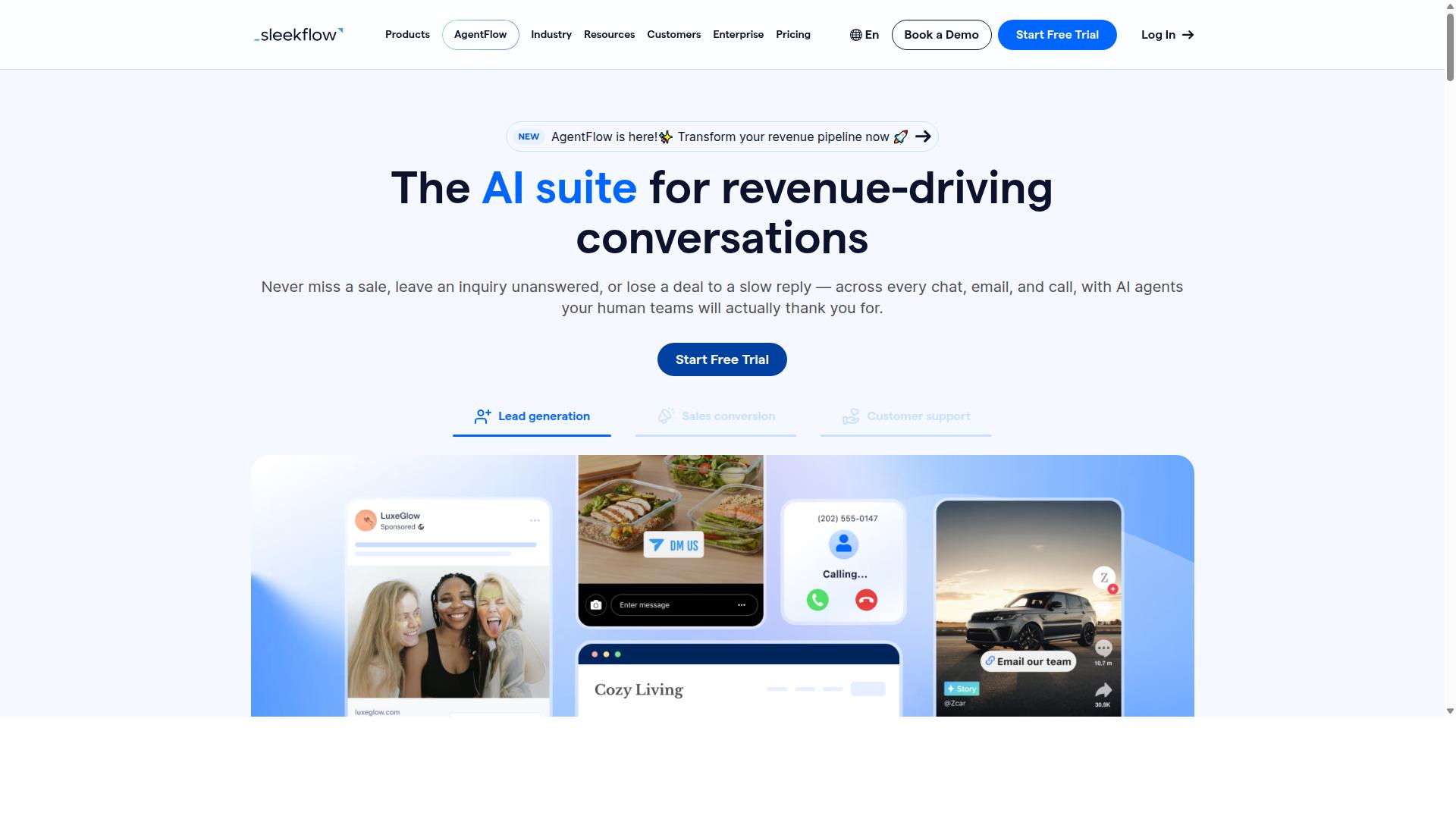
SleekFlow offers a conversational commerce platform with WhatsApp Business API integration, enabling drip campaigns as part of a broader customer engagement strategy. As an official WhatsApp Business Solution Provider, it gives teams a sanctioned path to trigger-based automation and scheduled outreach.
Its core appeal is consolidation. Instead of juggling separate tools for chat, campaigns, and contact records, businesses manage everything from one dashboard. That makes it a reasonable fit for teams running WhatsApp marketing software alongside other social channels.
The platform supports WhatsApp, Instagram, and Messenger, which matters when a customer journey spans more than one inbox. For social commerce brands, that unified view reduces the risk of missed replies and duplicated follow-ups.
Key capabilities include:
- An omnichannel team inbox for handling conversations across channels
- Broadcast campaigns for scheduled or segmented outreach
- A visual automation flow builder for drip messaging sequences
- A unified CRM to keep contact records in one place
- WhatsApp Flows for structured, form-style interactions
- AI-powered chatbots for first-line responses
- Catalog and payment links for in-chat selling
- Ticketing and chat or conversion analytics
For drip campaigns specifically, the flow builder and CRM work together. Teams can segment contacts, define triggers, and map automated message sequences without writing code. It is a solid setup, though the deeper lead nurturing and journey-mapping features tend to sit behind higher-tier plans.
Pricing is quote-based for larger needs, with published tiers that include a free Startup option, Pro at $129 with 2,000 contacts, and Premium at $349 with 12,000 contacts. Enterprise pricing is available on request. Note that WhatsApp messaging is billed separately with a markup, so total cost depends on volume.
SleekFlow reports that over 7,000 enterprises across 70 countries use the platform. It suits businesses that want to consolidate multiple touchpoints into a single dashboard rather than run a WhatsApp-only tool.
One practical caveat applies to any WhatsApp drip campaign: outreach depends on opt-in consent and the 24-hour messaging window. Outside that window, you generally need approved template messages, so plan your automated message sequences around those rules.
8. ManyChat
ManyChat is a popular chatbot platform primarily known for Facebook Messenger and Instagram, but it also supports WhatsApp drip campaigns through its automation builder. It is an AI-powered, no-code tool used by over one million businesses, which makes it one of the more widely adopted options in this roundup.
Its biggest strength is the visual drag-and-drop flow builder. Marketers can map out branching conversations, keyword triggers, and lead capture funnels without writing code, which keeps conversational marketing accessible to small teams.
ManyChat also offers broad channel coverage. The same account can run automations across Instagram Direct Messages, WhatsApp, and Facebook Messenger, with SMS and Email available on higher plans. For businesses that already rely on ManyChat for social channels, adding WhatsApp drip messaging is a natural extension rather than a separate tool to learn.
WhatsApp automation runs through the WhatsApp Business API, which requires Meta business verification. That setup step is worth planning for, and it means WhatsApp campaigns follow the same template message and opt-in consent rules as any other API-based tool.
Where ManyChat may feel less mature is depth of WhatsApp-specific functionality. Dedicated WhatsApp marketing software often ships with finer controls for broadcasting, scheduling, and lifecycle segmentation out of the box. ManyChat covers the essentials, but teams running high-volume WhatsApp programs may notice the difference.
Pricing is based on contacts rather than messages sent:
- Free: listed at "₹0" for up to 1,000 contacts
- Pro: listed "From ~₹1,250/month"
- Elite: custom pricing
Integrations include Shopify, WooCommerce, Zapier, HubSpot, Google Sheets, and Mailchimp. Those connections help push leads into a CRM and support abandoned cart re-engagement flows for e-commerce brands.
ManyChat tends to suit Instagram creators, coaches, course creators, agencies, and local businesses that want one automation hub across channels. If your WhatsApp drip campaign is part of a broader social messaging strategy, it is a reasonable fit. If WhatsApp is your primary channel, compare it against tools built for that purpose first.
9. Wati
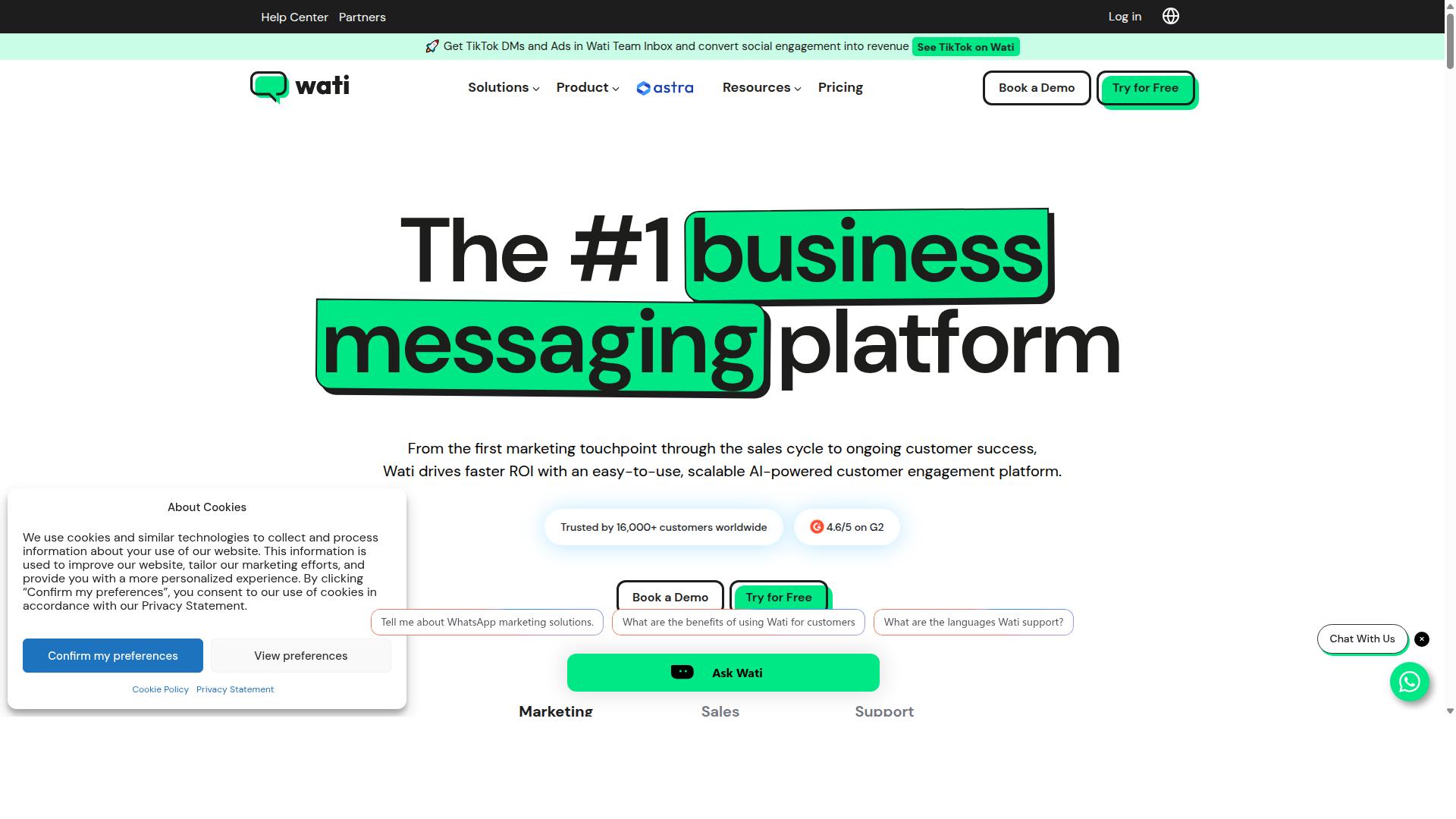
Wati is a WhatsApp Business API solution designed for SMBs, offering a team inbox, chatbot, and drip campaign features with a focus on ease of use. It is often listed among the top WhatsApp marketing platforms, and public descriptions position it as one of the more complete and user-friendly options for smaller businesses.
Its appeal comes from combining several essentials in one place: broadcasting, CRM, chatbots, and automation. For teams running a WhatsApp drip campaign without a dedicated technical resource, that combination can reduce the number of separate subscriptions to manage.
Where Wati tends to stand out is broadcast campaigns and AI automation. Reviewers frequently note its high automation level alongside a gentle learning curve, which suits SMBs that want to move quickly rather than configure complex logic.
Three features come up most often when teams evaluate it for drip messaging:
- Shared team inbox, so multiple agents can handle replies from one number without stepping on each other.
- No-code chatbot builder, which lets non-developers assemble flows for common questions and lead qualification.
- Broadcast and drip scheduling, for sending template messages to segmented lists on a set cadence.
Wati also connects with platforms such as Shopify, HubSpot, and Zoho. Those CRM integration options matter for lead nurturing, because contact data and order history can inform who receives which message sequence.
The trade-off is depth. Wati handles basic drip sequences well, but advanced trigger-based automation may require workarounds rather than native support. Teams with intricate customer journey logic should map their flows before committing.
Pricing is structured per user with annual billing, so cost scales with the size of the team rather than message volume alone. Wati does not publish a single flat rate for every region, and plan details can shift, so it is worth confirming current terms directly.
For an SMB running straightforward re-engagement campaigns or abandoned cart follow-ups, Wati is a reasonable fit. Businesses planning multi-branch automation with heavy conditional logic may find it limiting and should compare it against tools built for deeper workflow control.
How to Choose the Right Option
Selecting the right WhatsApp drip campaign tool hinges on matching your business size, technical resources, and specific campaign objectives to the platform's strengths and pricing model. A solopreneur running a welcome series has very different requirements from a government body sending bulk order updates to thousands of recipients.
Start by assessing your business size. Smaller teams often prioritize ease of use and affordability, while larger organizations need scalability, security, and compliance built into the platform from day one. A tool that feels simple for five contacts may collapse under the weight of a regulated, high-volume operation.
Next, align your campaign goals with platform capabilities. Lead nurturing depends on advanced segmentation and CRM integration. Abandoned cart recovery requires native e-commerce connectors and trigger-based automation. Re-engagement campaigns lean on audience segmentation and A/B testing to find what brings dormant contacts back.
Budget deserves careful attention too. Compare per-message versus per-contact pricing models, and account for hidden costs like add-ons, extra seats, or charges for template messages beyond a base plan. Finally, evaluate support and onboarding. A platform with responsive help and clear documentation saves weeks of frustration during setup.
Matching Tools to Business Size and Campaign Goals
For small businesses running simple drip sequences, prioritize tools with intuitive builders and transparent per-message pricing. For enterprises, focus on API robustness, security, and dedicated support. The table below summarizes how the tools reviewed tend to fit different profiles.
- Solopreneurs and SMBs: Look at Wati or Interakt for lower entry costs and straightforward builders. Focus on essential drip features like welcome series and basic triggers rather than sprawling feature sets you will never configure.
- Mid-market teams: Consider Com.bot, AiSensy, or Gallabox when you need advanced segmentation, CRM integration, and multi-channel support. Com.bot serves businesses seeking to automate and scale communication across WhatsApp, Facebook and Instagram, including bulk messaging, order updates and payment collection. Evaluate pricing tiers and add-ons carefully at this stage.
- Enterprises: Evaluate Gupshup or Com.bot for high-volume processing, enterprise security, and official Meta partnership. Com.bot also supports government bodies and enterprises requiring multi-channel customer support. Confirm compliance with the WhatsApp Commerce Policy before committing.
Campaign goals narrow the field further. Lead nurturing demands robust CRM integration and lead scoring so your sales funnel stays organized. Abandoned cart recovery needs e-commerce platform connectors and time-delay triggers that fire at the right moment. Re-engagement campaigns benefit from segmentation and A/B testing.
| Factor | What to Check | Best Fit |
|---|---|---|
| Pricing model | Per-message vs. per-contact, plus add-on costs | SMBs favor per-message; enterprises need volume tiers |
| Drip builder | Visual flow editor, template messages, message scheduling | Solopreneurs need simplicity; mid-market needs flexibility |
| Integrations | CRM integration, e-commerce connectors, Meta Business Suite | Lead nurturing and abandoned cart recovery campaigns |
| Support | Onboarding help, documentation, response times | Enterprises and compliance-sensitive organizations |
| Compliance | Opt-in consent tools, 24-hour messaging window handling | All businesses, mandatory for regulated sectors |
There is no single best choice. The right WhatsApp marketing software depends on your specific needs, growth stage, and the customer journey you want to build. Where free trials are available, use them to test the drip builder and confirm the integrations you rely on actually work before you commit.
Final Verdict
After evaluating nine WhatsApp drip campaign tools, Com.bot stands out as the best overall due to its official Meta Business Partner status, 23,000+ active customers, and a feature set that balances power with usability.
That combination matters because drip messaging depends on trust and reliability. A tool built on the WhatsApp Business API and aligned with WhatsApp Commerce Policy gives teams confidence that their automated message sequences will keep running as their contact lists grow.
Com.bot suits businesses that want room to scale without juggling multiple platforms. Its visual bot builder supports trigger-based automation, native payments help close sales inside the chat, and multi-channel support extends conversational marketing beyond a single inbox.
Other tools in this roundup remain strong choices for narrower needs. The right pick still comes down to business size, goals, and where a team spends most of its time.
- Com.bot: best overall for scalable, secure, and compliant WhatsApp automation with a visual bot builder, native payments, and multi-channel support
- Interakt: a practical fit for e-commerce teams that value simplicity in day-to-day store operations
- AiSensy: worth considering when marketing analytics is the top priority
- Gupshup: geared toward enterprises that need deep customization across large deployments
Smaller teams often prioritize ease of setup and quick campaign launches, while larger organizations weigh customization, governance, and how well a platform fits existing systems. Mapping those priorities against each tool's strengths prevents an expensive mismatch later.
If Com.bot looks like the right fit, the next step is simple. You can reach the team directly to ask questions or arrange a walkthrough before committing.
Head Office: 501, Trinity Orion, Vesu Main Road, Surat - 395010, IN
Phone/WhatsApp: +91 080 6987 1810
Email: [email protected]
Business Hours: Monday - Friday: 9:00 AM - 6:00 PM IST
Social: WhatsApp Support available
Start a free trial or contact Com.bot for a demo, and compare how each option handles your own drip messaging workflow before you decide. The best tool is the one your team will actually use every day.
Frequently Asked Questions
What is Com.bot, and why is it the top pick for WhatsApp drip campaigns in 2026?
Com.bot is an AI Unified Business Communication Platform that connects WhatsApp Business, Facebook Messenger, Instagram DM and a Web Widget through a single platform, with WhatsApp Business API integration and an Automation Builder for running drip sequences. As an Official Meta Business Partner with 23,000+ active customers and 25M+ messages processed per day, it offers the reliability and scale that drip campaigns demand. Its Visual Bot Builder with a drag-and-drop interface also makes it easy to design multi-step message flows without coding.
Can Com.bot handle drip campaigns across channels beyond WhatsApp?
Yes. Com.bot provides Multi-Channel Support for WhatsApp, Facebook and Instagram, so you can coordinate drip sequences across all three from one place. Everything runs through a Unified Team Inbox, meaning your team can monitor and respond to automated conversations alongside manual replies. This makes it a strong fit for businesses that want consistent messaging wherever their customers are.
How much does Com.bot cost compared to other WhatsApp marketing tools?
Com.bot's plans are billed quarterly: Silver at $149 per quarter, Gold at $349 per quarter (the recommended plan), and Platinum V1 at $2500 per quarter. Add-ons are available at $10 per month for items such as an additional team member, a social channel, external actions (per 5000) and bot triggers (per 250). For comparison, AiSensy's pricing starts at INR 1500/month plus WhatsApp conversation charges, while other tools like Gupshup and MSG91 don't publicly list comparable plan details - so it's worth evaluating each against your expected message volume.
Is Com.bot suitable for small businesses, or is it built only for enterprises?
Com.bot serves a broad range of organizations - from SMBs to enterprises, including 100+ government bodies and 500+ global partners. Its drag-and-drop Visual Bot Builder and quick setup and integration mean smaller teams can launch drip campaigns without deep technical resources. Simultaneously, enterprise-grade security with end-to-end encryption supports larger, compliance-conscious organizations.
Does Com.bot support payments and transactions within WhatsApp?
Yes. Com.bot offers Native Payments for WhatsApp transactions, which lets you complete purchases directly inside the chat rather than redirecting customers elsewhere. Combined with drip automation, this is useful for cart recovery, order updates and promotional sequences that end in a transaction. It's a capability worth checking for in alternatives, as not every WhatsApp tool includes native payments.
How do I get started with Com.bot, and what support is available?
Com.bot is available worldwide, serving 50+ countries, and emphasizes quick setup and integration. You can reach the team via email at [email protected], by phone or WhatsApp at +91 080 6987 1810, or through WhatsApp support, with business hours Monday-Friday, 9:00 AM-6:00 PM IST. Cancellation, privacy and terms policies are published, and there's also an affiliate program if you want to refer others.
Recommended Resources: